
Scripture Readings: Genesis 2:15-17 & Matthew 4:1-11
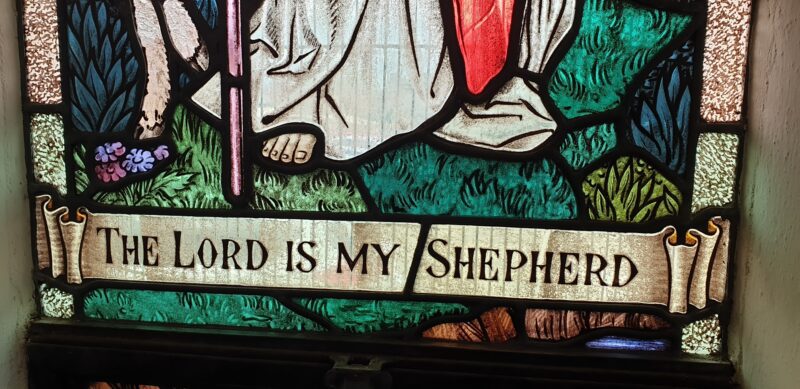
In the beginning, the human story unfolds in God’s garden – abundant, beautiful, and entrusted to our care. Yet even there, a boundary was given, and temptation whispered. From the garden, humanity’s journey bends toward the wilderness, a place of loss, longing, and hard truth.
(Slide 1) We know what it means to step from grace-filled trust into dry seasons of struggle and testing. And it is precisely there that the Gospel speaks hope: Jesus enters the wilderness, not as a distant observer, but as one who stands where we stand, feeling the ache, hearing the temptations, and choosing faithfulness. Lent invites us to recognize Jesus’ movement for us.
Genesis 2:15 tells us that God placed the human in the garden “to work it and take care of it.” Our first calling was participation in God’s caring order. We were never owners, but stewards; never independent rulers, but partners in a harmony God had already begun.
(Slide 2) Then comes the command: “You are free to eat from any tree… but you must not eat from the tree of the knowledge of good and evil.” Let us notice the pattern – abundance first, boundary second. God’s command is not restrictive at its core but protective. Freedom flourishes within loving limits. The boundary was not merely about fruit, but about trust. The prohibition guarded relationship, and God’s command was relational. To cross it was not just disobedience, but a rupture of trust.
(Slide 3) Genesis 2 reveals three truths: we are called into God’s caring order, given generous freedom within loving boundaries, and invited into a relationship grounded in trust. When trust is broken, the harmony of the garden gives way to the hardship of the wilderness.
From Garden to Wilderness, the story reaches its turning point in Matthew 4. Where the first human crossed the boundary, Jesus honoured it. In the garden, humanity reached for what was withheld; in the wilderness, Jesus refused what was wrongly offered. He lived by every word from the Father.
Jesus enters the wilderness not only to face temptation, but to restore what was lost in Eden. Through His obedience, He leads us back, not merely to a place, but to restored trust within God’s caring order once again.
Matthew 4 begins, “Then Jesus was led by the Spirit into the wilderness to be tempted by the devil.” The word “then” refers to what has just happened after Jesus’ baptism. The Spirit descended, and the Father declared, “This is My beloved Son, in whom I am well pleased.” From affirmation to testing, Jesus moves immediately from the waters into the wilderness.
Temptation was not a sign of weak faith. Even the beloved Son was led into a season of fasting and trial. After forty days and forty nights, He was hungry. To save us, Jesus willingly entered the barrenness of the wilderness and the reality of human deprivation.
The wilderness He faced mirrors our own world – a place where many endure hunger, poverty, and deep spiritual struggle. Yet trials can become a place of refinement and growth. Each of us walks through seasons of testing. However, may we experience the overflowing grace and sustaining power of God even in those wilderness moments,
(Slide 4) What do we do when our hunger speaks louder than our faith? The desert sun burns overhead. Forty days have passed. Jesus stands weak with hunger when the tempter comes – subtle, almost reasonable: “If You are the Son of God, tell these stones to become bread.” The stones lie at His feet like loaves ready to be baked. Who would blame a starving person for eating? Yet beneath the suggestion lies a deeper whisper: Use Your power for Yourself. Satisfy Your need apart from trust in the Father.
(Slide 5) Jesus does not argue or perform. He answers with Scripture: “One does not live by bread alone, but by every word that comes from the mouth of God.” His victory is not in denying hunger, but in refusing to let hunger define Him. He trusts that the Father’s Word sustains more deeply than immediate relief. And here is our hope: when our wilderness is filled with emotional hunger, spiritual dryness, or unanswered prayers, Jesus shows us that trust in God’s Word is stronger than the loudest craving.
(Slide 6) Then the scene shifts. The holy city gleams below. From the temple’s highest point, the drop is dizzying. The tempter now quotes Scripture: “If You are the Son of God, throw Yourself down… for it is written, ‘He will command His angels concerning You.’” One dramatic leap and heaven would intervene.
(Slide 7) But Jesus hears the hidden challenge: Force God’s hand. Demand a sign. Make faith unnecessary. He replies firmly, “Do not put the Lord your God to the test.” No leap. No spectacle. Just steady trust. He chooses obedience over display.
And how often do we stand on our own high places, asking for signs, seeking the rescue we expect? Yet even there, Jesus enters our wilderness. He stands beside us on the edge of doubt and teaches us that faith is not forcing God to act but trusting Him even when He seems silent.
(Slide 8) The final scene opens wide. From a high mountain, the tempter no longer whispers; he offers boldly: “All this I will give You, if You will bow down and worship me.” No cross. No suffering. Just an instant rule. The shortcut to kingship lies at Jesus’ feet.
(Slide 9) Then Jesus speaks with holy authority: “Away from Me, Satan! For it is written: ‘Worship the Lord your God and serve Him only.’” He chooses the cross over the shortcut. He chooses worship over power. His victory is decisive. The wilderness trembles, and the devil departs.
(Slide 10) Here is the good news for us: when we are tempted by ambition, recognition, or control, when shortcuts seem easier than obedience, Jesus enters our wilderness. He has already stood on that mountain. He has already rejected false glory. And because He remained faithful, angels drew near, not only to minister to Him, but to remind us that faithfulness in the wilderness leads to the presence of God.
In this Lenten season, we see that the temptations of bread, spectacle, and power are not merely ancient stories; they are the very paths we still walk. Hunger tempts us to doubt God’s provision. Fear tempts us to test His faithfulness. Ambition tempts us to seek glory without the cross. Yet in every trial, Jesus remained faithful where we often fail. He trusted the Father’s Word, refused to misuse divine power, and chose worship over worldly gain. Because He overcame, our wilderness is no longer a place of defeat but of transformation. Lent reminds us that Jesus enters our wilderness not to condemn us, but to lead us through it, so that by His obedience, we may learn again to trust, to worship, and to live by every word that comes from God.
This is the grace of Lent: the wilderness is no longer empty. Where Adam reached for the forbidden fruit, Jesus fasted and trusted the Word of God. Where humanity faltered, Christ remained faithful. Now He walks into our wilderness – our weakness, fear, regret, and exhaustion – with steady love. He stays, resists the lies that once defeated us, and opens a new path forward. As we journey through Lent, may we trust that God is at work. For the One who met us in the garden and overcame the wilderness still leads us, step by step, toward life restored.
Thanks be to God! Amen.
(Ref. Bible, commentaries, theological books, UCA materials, and a Vanderbilt Divinity Library Resources)