Sermons

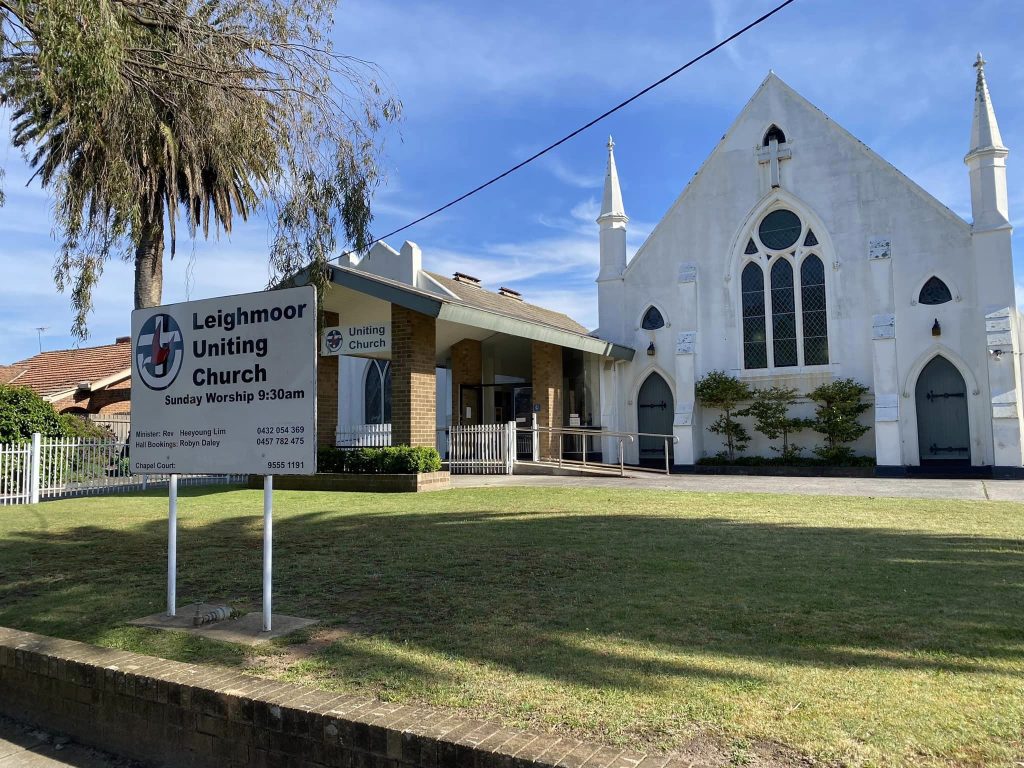
outside view

By the rivers of Babylon

Hymn suggestions TIS 768: Praise God, from whom all blessings flow TIS 85: By the Babylonian waters TIS 708: By the waters, the waters of Babylon TIS 667: How shall I sing to God TIS 689: Lord, hear my praying TIS 613: Lord of all hopefulness Prayers of Adoration, Thanksgiving and Confession. O gracious, constant, and loving God what a world you have created! From gorges and water falls, to mountains which reach up into the clouds-such variety! We are awestruck by your creativity and design. You who created the Himalayas-created little human beings. You who plotted out the oceans of the world, and the land mass upon them-made us-and love us. You who formed space: the solar system, galaxies, black holes, balls of gas–which we call stars-know us in our small suburbs. We are in awe of your majesty. O loving God, we greet this day, and give you thanks for a fresh, clean slate! Thank you for good news, be it in the number of decreasing Covid-19 cases, for a fun time watching the football Grand Final, for warmer weather, for new growth in our gardens and in the parks, and the promise of a slow return to a somewhat more ‘normal’ life. We thank you for celebrations: birthdays, wedding anniversaries, births. We thank you for the gift of music; for being able to sing and hum and whistle. We thank you for the greatest gift of all: your son, Jesus Christ. And yet, we struggle. Lord, you know we have given in to despair, we have allowed fear to make us snappy, or judgemental. Forgive us. When we have squashed hope, or given in and allowed the weight of the world to push us down, and not asked you for help, Forgive us. Forgive us when our behaviour or words have been un Christian. Forgive us when we have turned off the music in our hearts and in our lives, preferring the clamour of anxiety or the heavy glue of grizzles. Forgive us. Forgive us when we have switched you off, as though you are a tv channel, and not tuned in to you with our whole being. And in a time of silence we remember other things for which we seek forgiveness (silence) God is love. Through Christ our sins are forgiven (thanks be to God). Take hold of this forgiveness, and live your lives in the power of the Holy Spirit, Amen Bible Readings Psalm 137 Matthew 22: 34-46 Sermon [at the bottom of the sermon is a youtube link if you are able to/wish to look at it afterwards.] ‘By the rivers of Babylon- There we sat down and there we wept When we remembered Zion. How could we sing the Lord’s song in a foreign land?’ (from Psalm 137) Today I thought I would set the lectionary readings aside to tackle something that is weighing on some of our hearts. How do we sing…how do we sing to God in a time of covid-19? How do we sing when we are not allowed to gather for worship, not allowed to sing in groups? How do we sing…when we do not feel like singing? What is our response to a ‘new normal’, a ‘foreign’ or ‘strange land’? Psalm 137 is written through tears of profound sorrow, it cries out, screaming of deep, cutting grief. In 587 BCE Jerusalem fell to the army of Nebuchadnezzar, King of Babylon.  Many Jews were deported, taken into exile.  Only the old, the lame, or the sick were left behind. Gold and precious items from the Temple were plundered, carried away, leaving Jerusalem in ruins. Their captors requested them to sing…but how could they?  If they were expected to sing songs of Zion, songs of praise that were meant to be sung in their place of worship, which was far away and in ruins…how was it possible to sing?  Were the captors being cruel?  Or trying to cheer them up? How do we sing away from our places of worship?  We are not many kilometres away, in a foreign land, like the Israelites were, BUT at the moment it does feel foreign, even if that land has, until recently, been within a 5 km range. We know our place of worship still stands.  Indeed renovations have been done during lockdown-but we are still locked out, the organ is silent, the piano remains closed, the hymn books shut, tight-lipped.  We have hung up our harps! Silence. ‘By the car park of Leighmoor, there we sat down and there we wept…’ Lament. It is part of our life.  We prefer the upbeat sound of praise, but life also includes lament. Think Maundy Thursday.  Where does Jesus go after the Last Supper?  To the Garden of Gethsemane, ‘after they had sung the hymn.’ Maundy Thursday leads into Good Friday, the saddest day in our church year…yet we still sing, we mourn. When I survey the wondrous cross…the tears still come, unprompted, after so many Good Fridays. What about funerals?  I know most of us can’t attend them at present, due to the low number permitted.  Abide with me.  Not often heard at other times, is it Lament. The need to cry out. It is part of our Biblical tradition, deep within Scripture. Dictionaries define the word lament as ‘feeling or expressing sorrow or grief.’ It’s not a word we use much these days.  We don’t often practice lament in Western culture.  When I nursed, I would hear relatives of people from the Middle East, or those from Greece, wail.  Not a way of grieving for many of us.  We don’t show our feelings in public.  We cry at home, or in the shower-not in front of others.  We apologise if we cry in front of others.  We say “Sorry for my tears.” Rather than express our emotions, we prefer tend to hide them, sometimes even denying they exist.  We might bury ourselves in work, or keep busy.  We’ll do anything rather

By the rivers of Babylon Read More »

outside view

God’s hand is reaching out-for yours.

Hymn suggestions: TIS 693: Come as you are TIS 132: Holy, holy, holy TIS 446: Glorious things of you are spoken TIS 215: You servants of God TIS 222: Rock of Ages, cleft for me TIS 569: Guide me, O thou great Redeemer Prayers of Adoration, Thanksgiving, and Confession We adore you, God, a God of truth, a God interested in all that goes in amongst your creation, A God who is mystery, yet made known to us, And found by all who seek you with their whole heart. You are a God of mystery, a God of glory. Your awe-inspiring power shakes the mountains and stirs the seas-but your face is hidden from us. We see what you do and we learn of your nature through Jesus, but, like Moses, we cannot see your face. It is by faith, and not by sight, that we know you and trust your love. Reveal yourself anew to this this day, so that we may taste afresh your goodness and marvel at your grace. We thank you, God, That you require us to see with the eyes of faith, and to know with a heart of loving trust. We thank you for all the ways in which we come to know you -for the Bible -for family and friends -for the church -for schools -and especially for Jesus Christ. O Glorious God, your face is too radiant for our earthly eyes.   Allow us to see the refection of your power, so that we know your presence goes before us throughout our whole journey through life. Yet, we confess our liking for the tangible, and the touchable. We trust what we can experience with our human senses and doubt what we cannot. We want proof. Like Moses, we want to see you, to seek an experience of your glory that we can behold on our own terms. Forgive the arrogance and ignorance of such desire, Forgive the resistance to live by faith alone. Forgive us for thinking we can command you or somehow fully know your mind. Forgive us our other sins (and in a time of silence we bring those items before you). God has made goodness ‘pass before us’ in the life, death and resurrection of Christ Jesus. Because of this , we know our God is kind and merciful, slow to anger and quick to forgive. Hear then the word of grace and the assurance of pardon: Our sins are forgiven (thanks be to God) Take hold of this forgiveness, and live your lives as forgiven, much loved, people. Bible Readings: Exodus 33: 12-23 Psalm 99 1 Thessalonians 1: 1-10 Matthew 22: 15-22 Sermon H. G. Wells said: “There was a time when I looked up at the stars and felt a sense of awe and wonder.  Now, I look at the stars in the same sense that I look at the wall paper in a train station waiting room.” -A loss of the sense of awe and wonder -of mystery Today’s reading from the Book of Exodus is enveloped in mystery -it’s about distance and nearness, transcendence and immanence (religious speak for distance and nearness!) Moses knew the voice of God. In Exodus it says that God ‘used to speak to Moses face-to-face as one speaks to a friend.’ Ever since that day at the burning bush, Moses and God were on a first-name basis. Once free of Egyptian slavery, out in the wilderness, God calls Moses up to Mt Sinai. The people are left down in the valley. Moses is delayed. Do you remember what happened ? The people grew restless. “Is God here for us or not?” they demanded. Not content with some distant, faceless Tod up on the mountain, they take matters into their own hands. -they fashion for themselves a calf made out of gold, they bow down and then dance around it, They worship a golden calf-there in their midst-in place of God, who is distant, away from them. God is furious! Having delivered the people from slavery, promising to be their God if they will be God’s people, God is angered by this breaking of covenant, this idolatry: “Get out of here,” God commands, telling them that this time they will make the journey through the desert along. Exodus 33:3: ‘Go up to a land flowing with milk and honey; but I will not go up among you, or I would consume you on the way, for you are a stiff-necked people!” -they’re on their own. The people let up a tremendous wail, they mourn their actions, for they know that out here in the wilderness, along with no God to guide or protect them-they’re history! This could be the end of the road for Israel. “Let me talk to God,” says Moses. “I’ll do what I can.” replies Moses. So Moses intercedes for Israel. He moves into action. Moses reminds God that this Exodus- freeing the Hebrew people from slavery in Egypt-and ‘going out’-  (the word Exodus means ‘going out into the way) in a new way, a new direction, to the promised land-was God’s idea in the first place! -it wasn’t Moses’s idea! Listen to Moses’s boldness… Exodus 33:12-the opening verse on today’s reading: ‘Moses said to the Lord, “See, you have said to me, ‘Bring up this people,’ but you have not let me know whom you wills end to me.” In other words-Moses is saying-you were going to send me helpers, assistants-where are they? ‘Besides,’ continues Moses, ‘This nation is your people’ Vs 13:  ‘Consider too that this nation is your people.’ In other words- you created them, you called them, you promised to be with them, now they’re your problem! Moses is brash, bold. Moses reminds God that God had not kept his side of the bargain. ‘This nation is your people.’ -what makes this people distinctive is that God’s presence is with them. Moses was not timid in prayer! ‘Show me your ways, so that

God’s hand is reaching out-for yours. Read More »

Sunday Sermon 11-10-2020

Service and sermon  October 11, 2020, Leighmoor Uniting Church -Rev Barbara Allen Suggested Hymns TIS 703: As the deer pants for the water TIS 134: Praise my soul, the King of Heaven TIS 675: Lord, the light of your love is shining (Shine, Jesus, shine) TIS 474: Here in this place new light is streaming TIS 416: Great God, your Spirit, like the wind TIS 544: Since the world was young TIS 545: Shout for joy! TIS 242: I danced in the morning TIS 585: I heard the voice of Jesus say TIS 755: You shall go out with joy Prayers of Adoration, Thanksgiving and Confession O God, our Loving Parent in Christ, we thank you for the gift of life. Although we cannot share our lives face to face with many others, we are grateful for the people in our lives-be it face-to-face, or via zoom, the internet, the phone, or written letter. We thank you for your wonderful creation, which we delight in. For the bright spring flowers, the refreshing spring rains, watching the winds sway and bend during the strong winds, to be able to inhale the fragrance of the season, and to delight in the warmer days and nights. We give you thanks. We thank you that during these difficult times, there are still many signs of hope. We thank you for newborns, and for the newly pregnant. We thank you that charities are still undertaking their important work, that people are still trying to save endangered species, and that patients are recovering from illnesses, including covid-19. As we remember and give thanks for your many gifts and blessings to us, we realize that at times we have left the way you commanded us to follow, following  instead our own wills. Forgive us. Forgive us when pride in our human successes has kept us absorbed in ourselves, so that we have neglected to fully respond to your invitation to live differently, to live for others. Forgive us when we put human obligation ahead of heavenly opportunity. We make excuses as to why we cannot commit or follow right now, yet we presume to judge who should be invited to your table, and who doesn’t warrant an invitation. Forgive us. Forgive us our tendency to procrastinate, rather than to participate. And in a time of silence, we remember other things for which we seek forgiveness. (silence) God is love. Through Christ our sins are forgiven. (Thanks be to God) Take hold of this forgiveness and live your life in the power of the Spirit. Amen Bible Readings: Exodus 32: 1-14 Psalm 106: 1-6, 19-23 Philippians 4:1-9 Matthew 22: 1-14 Sermon ‘Once more Jesus spoke to them in parables, saying: “The kingdom of heaven may be compared to a king who gave a wedding banquet for his son.” (Matthew 22: 1-2) Parties. Wedding banquets Celebrations. We are missing them, aren’t we? Most of us love parties, especially if they’re celebrating a wonderful event, such as a wedding, an engagement, a baptism, an anniversary, a graduation. We do like to celebrate! Sometimes we forget how often Jesus not only talks about parties- but GOES to parties. Read any gospel (preferably Luke or Matthew) and note how often Jesus is at somebody’s party -at someone’s celebration. John’s Gospel, chapter 2, opens with the account of Jesus’ earthly ministry-and where is he? -at a wedding reception-turning water into wine. -preventing embarrassment –allowing the wedding reception to continue. -he goes to parties (‘this man eats and drinks with sinners”-he parties with sinners). He speaks of celebrations: the large party the father organised for the return of the prodigal son. There was the Last Supper -a foretaste (as were the other celebrations) of the great, final, most splendid party of all-the Heavenly Banquet. In Revelation 19: 9: ‘And the angel said to me…Blessed are those who are invited to the marriage supper of the Lamb.’ In Jesus-the whole world is invited to a party. The kingdom of heaven is like a party. God, the King, isn’t upset at anybody -doesn’t bear a grudge -isn’t in the business of striking anyone off the guest list because his son is here. God wants everyone to come to the party. Because God’s happy-God wants everyone to be happy. ‘And he sent his servants to call those who were invited to the marriage feast.’ Now, some knowledge of wedding customs is helpful to aid our understanding of this story. In biblical times, when the invitation to a feast was sent out, the time was not stated -but when the feast was ready, servants were sent out with a final summons to the banquet. So-you would know the day and date-just not the time. When the cooking was finished, THEN all was ready. -servants would call on you. So, in this parable, with all the comings and goings, we needn’t be concerned about the food being over cooked or being left out for too long. But things aren’t always that easy. Jesus said that those who were invited to the wedding party wouldn’t come. The world, says Jesus, is full of people who can’t seem to recognise a good thing when they hear about it, who will not accept -free grace -dying love Total acceptance. Are we more likely to accept an angry God, than a loving, accepting one? Are we? Jesus hasn’t finished telling the parable. The king, undeterred from his desire to throw a party for his son, sends out more servants. “Tell the uninvited, behold the feast is ready; come to the marriage party.” The guests ‘made light of it’- made light of the renewed invitation-the Greek translates into something quite harsh, more along the lines of  ‘don’t give a…’ Moreover, they not only make light of the invitation, they kill the kings’ servants. Such behaviour seems excessive. They don’t just ‘forget’ to RSVP. They also murder the postmen. Now follows a blood bath. ‘The king was angry’ says Jesus. ‘He sent his soldiers

Sunday Sermon 11-10-2020 Read More »

Sunday Sermon 04-10-2020

Blessing of the Animals service.  Leighmoor UC, October 4, 2020 -Rev Barbara Allen Suggested hymns TIS 100: All creatures of our God and King TIS 107: Sing praise and thanksgiving, let all creatures living TIS 156: Morning has broken TIS 155: O Lord my God, when I in awesome wonder TIS 135: All things bright and beautiful TIS 175: Did you ever see a kookaburra laugh? TIS 690: Beauty for brokenness TIS 650: Brother, sister, let me serve you TIS 626: Lord of creation Prayer of Adoration, Thanksgiving and Confession. O Loving  God, Creator of all creatures, great and small, we celebrate the gift of life-for all. We give thanks for our fur friends, our feathered friends, our friends with scales, and fins and wings, our friends who have the breath of life as we have, for those non –human friends who share our lives, or have in the past. For the ones who give us a reason to get out of bed, or go for a walk. For the wild ones who amaze us with their beauty and power, we thank you. Creator God, thank you for the gift of animals, those in the wild, on farms, in our homes. You brought into being that which we could not imagine for ourselves, life we cannot see without the aid of microscopes, animals we can only see in pictures and on screens, from remote regions of this planet earth. We thank you for abundant life; for the birds we hear in the morning, for the drone of the bees when we are outside, for the vast tapestry of life which is interwoven. We thank you for the gift and blessing of our own animal companions; for the joy they bring us, for the unconditional love and forgiveness which teaches us about you; for the confidant, the listener, the stress-releaser, for the benefits they are to our health and to our Spirit, we give you thanks. As we celebrate their God-given lives, we pray for compassionate hearts, we pray that we may care for them, be good stewards of this earth, and care for all creation. As we come together to thank you for the blessing and gift of other creatures, we know that we have not always been faithful caretakers of the animals. Forgive us when we have dirtied their environment, erased places of shelter, polluted the waters, killed off their food supplies, or neglected to feed or tend animals in our own communities. Forgive us when we have neglected our own animal companions; when we have said we are too busy to play, when we have shooed them away, when we have made excuses, saying we are too tired…too busy…more important engagements have come up…so that we do not walk them, cuddle them, or spend time with them. Forgive us. Forgive us when we have not considered the wider picture, when we have neglected animals in the wild, ignored cruelty inflicted in the name of ‘sport’ or in the name of food production. Forgive us when we have focused on our favourite wild creatures, and neglected the care of the supposedly less beautiful, those who hold a lower public profile. Each year, more animals become extinct or are added to the endangered species list: forgive us for allowing your creatures to disappear from the earth. Forgive us when we neglect to see all animals as part of your creation, forgive us when we neglect to acknowledge that your love beats in all hearts, and that you give breath to all creation. In a time of silence we remember other things for which we seek forgiveness. (Silence) God is love. Through Christ our sins are forgiven  (thanks be to God). Take hold of this forgiveness, and live your life, knowing that you are forgiven and deeply loved. Know that the Holy Spirit will enable you to love fully, richly, and deeply. Amen Bible Readings Genesis 1: 20-31 Job 12: 7-10 Psalm 104: 10-25, 27-30 Galatians 5: 22-23 Sermon ‘Animals and humans are cut from the same spiritual cloth by the same divine hand and sustained by the same love.’ wrote Linda and Allen Anderson, in their book God’s Messengers: What Animals Teach Us About the Divine. In the series The Vicar of Dibley, one episode is devoted to a Blessing of the Animals service.  In a sense…as with many things Vicar of Dibleyish-it is more of a ‘what to avoid’ than a ‘what to do.’ But, at the end of the day, as Alice and the Vicar sit quietly over a cuppa, Dawn French, ie Geraldine the Vicar, asks Alice why people love their animals so much.  Alice…and this is important…for her response is NOT what we expect from this scatter brained, naïve, kooky individual…she replies along the lines of ‘Well…they’re nicer than human beings.’ ‘they’re nicer than human beings.’ Blessing of the Animals is an old festival, it dates back to an ancient Roman celebration of a pre-spring fertility festival to honour the goddesses Ceres and Terra, during which a pregnant animal was sacrificed, and garlanded oxen were paraded by the crowds.  By the 8th century, this Roman festival had endured to the point where the work animals were given a symbolic ‘day off’, while their owners sought the church’s divine protection for their work animals (ie so they could perform the work needed, rather than out of fondness or love). Although we tend to celebrate the Blessing of the Animals on October 4th, or the Sunday closest to that date, because it is the feast day of St Francis of Assisi, Patron saint of animals (and the date the secular world has procured and deemed ‘World Animal Day), in some communities a different date is observed, that of January 17th, the feast day of St Anthony the Abbot (also known as St Anthony of Egypt).  Services that used to be held in Catholic churches, that were part of the Franciscan order, are now conducted in many Protestant

Sunday Sermon 04-10-2020 Read More »

Sunday Service 27-09-2020

Service September 27, 2020   Leighmoor Uniting Church -Rev Barbara Allen Suggested hymns: TIS 693:  Come as you are TIS 256: From heaven you came, helpless babe TIS 640: Kneels at the feet of his friends TIS 692: Sometimes a healing word is comfort TIS 609: May the mind of Christ my Saviour TIS 613: Lord of all hopefulness, Lord of all joy Prayers of Thanksgiving and Confession Glorious God, we thank you for the gift of life. After sleep, we awake, to a new day, a day of possibilities, coloured with hope. Even though for most of the day we are confined to our homes, there are plenty of blessings around us. We thank you for magpie choruses that herald the dawn. After the more subdued hues of winter, we delight in the vibrancy of spring, finding new blooms and plants we did not know were embedded deep within the earth. We thank you for the plenty of harvests, for the variety of food items we can purchase from the supermarkets and food shops.  If we are short of prayer, let us pause in the produce aisle, marvelling at your creativity, your variety. We thank you for the sounds of children, out on their bikes, playing with friends and family.  -for their chalk drawings on footpaths, for their laughter and ability to remain in the present. Help us to hold on to our own child-like spirit and nature, so we may delight in the present, and be excited by what we see and experience. Help us to ask similar questions: how big is the moon?  How does a cake rise?  Who invented writing?   Keep us interested, keep us from the virus of boredom, save us from a lack lustre faith. And yet, most wonderful God, at times we become so caught up in the greyness of the world, the hard things going on, that we neglect to notice the good. Forgive us. Help us to acknowledge the goodness of people, their willingness to look out for their neighbour, following your teachings, even if they do not know it. Forgive us when we have been too quick to judge, too quick to point the finger, rather than acknowledging that we all make mistakes. Forgive us when we focus on what we can’t do, rather than on what we can do. In a time of silence, we remember other things for which we seek forgiveness. (silence) God is love, Through Christ our sins are forgiven. (thanks be to God) Take hold of this forgiveness and live your life as forgiven people,  the power and love of the Spirit. Amen. Bible Readings: Exodus 17: 1-7 Psalm 78: 1-4, 12-16 Philippians 2: 1-13 Matthew 21: 23-32 Sermon French priest and writer, the late Michel Quoist, wrote: ‘Before giving the floor to ‘thinkers’ at meetings, let’s give it to the ‘doers.’ Yes…but the problem is they’re not present- they’re out working.’ -a bit harsh!  C.S. Lewis said, “A person cannot remain just ‘a good egg’ forever.  Either one must hatch, or rot.”  -either one must hatch or rot. In today’s Gospel reading, Jesus is accosted in the Temple, while he is teaching. The chief priests and elders interrupt to question the source of his authority. Jesus is not just a good teacher-he is an excellent teacher. It was common practice for rabbis or teachers, to answer a question with a question. In today’s classrooms (face-to-face or via the internet in lockdown mode) this is still seen as sound teaching: “What do you think?” means the student has to bring forth information or evidence. The perceptive teacher can detect gaps in the child’s knowledge etc. This technique is not confined to class rooms-it is found at dinner tables, work places, social clubs, board rooms, and most sermons have questions for the ‘hearers’ to answer in their lives-how they carry out their daily living -their moral choices. And here, the chief priests and elders are in a ‘no-win’ situation! Listen to the debate: “By what authority are you doing these things, and who gave you this authority?  Jesus said to them, “I will also ask you one question; if you tell me the answer, then I will also tell you by what authority I do these things.  Did the baptism of John come from heaven, or was it of human origin?” And they argued with one another, “If we say ‘From heaven,’ he will say to us, ‘Why then did you not believe him?’ But if we say, ‘Of human origin,’ we are afraid of the crowd; for all regard John as a prophet.’ So they answered Jesus, “we do not know.” And he said to them, “Neither will I tell you by what authority I am doing these things.’ Regardless of how they reply to Jesus-they’re caught. They are unable to answer the question concerning authority. What does Jesus do now?  He enlarges his class size- In vs 28: ‘What do you think?  A man had to sons…’ By introducing a story, and the question ‘What do you think?’ WE are now part of the class! The story is a simple one. There was a father who had two sons. The father asks them to go out and work in the vineyard. He asks for help. One of the sons refuses- ‘he answered, “I will not.” A little later, the father looks up from what he’s doing and there is his son, in the vineyard.  He has changed his mind and does what his father asked him to do. (this may have happened to your children when they were young-perhaps asked to help set the table-a little protest-then they come back and do the task). His other son, who had answered politely “I go, sir” meaning ‘nothing would please me more than to go out and work in the vineyard for you.”-but he doesn’t follow through. -I bet that has happened at home too!  The sound of the garbage truck, trundling down the

Sunday Service 27-09-2020 Read More »

Sunday Sermon 20-09-2020

Service September 20th 2020 Leighmoor Uniting Church -Rev Barbara Allen Suggested Hymns TIS 153: God is love TIS 738: My Jesus, my Saviour TIS 129: Amazing Grace TIS 164: The great love of God TIS 624: Christ be my leader by night as by day TIS 619: Have faith in God, my heart TIS 666: We are marching in the light of God Prayers of Adoration, Thanksgiving and Confession Gracious and loving God, we give you thanks for a crisp, new day, full of promise. Thank you for helping us through a troubling week, time spent, for the most part, behind closed doors. We thank you for the scent of spring, for the colours of blossom and bulbs, for the warmer evenings, the lighter mornings. You are here with us. We thank you for all that keeps us believing that our lives have meaning, that the world is full of good, that our comings and goings are noticed by you, that disappointment, sickness, fear or death does not cut us off from you, that always there shines the light of Jesus Christ to sparkle in our happiness,  or to lighten our darkest hours. We thank you that you are a God who goes beyond justice, to overflowing grace, that though we are forever indebted to you, no weight of debt is held over us. Thank you for your lavish, undeserved generosity. And yet, we confess that we do not always look favourably upon your acceptance, forgiveness, and love for others. We have an ‘us’ and ‘them’ in our minds and hearts that is revealed in our prejudices and discriminations- even though your love accepts everyone. Forgive us. We are guarded, reasonable people who choose who and how much we will love, who choose what is deemed ‘sensible.’ Forgive us. We confess that this can lead to not loving our neighbours, not hearing the cry of the needy. Forgive us. Forgive what we have been, help us to amend what we are, and direct us to what we shall be. Forgive us and renew us. God keeps no account of wrongs, but assures us in Christ that our debt is completely cancelled. Our sins are forgiven and forgotten. We are free to begin again in newness of life, justified by our faith in Christ. Our sins are forgiven (Thanks be to God). Go and live your lives as forgiven people, loved by God, Amen Bible Readings Exodus 16: 2-15 Psalm 105: 1-6, 37-45 Philippians 1: 21-30 Matthew 20: 1-16 Sermon Jesus told many of his parables, NOT to give us information, BUT RATHER to get our adrenalin flowing!  There were two parables that drew lots of responses when I was a minister in a rural parish: the prodigal son (for most of the farmers were the elder son, staying to work on the farm), and this one, for they could identify with the subject matter.  They may even have been one of the hired help. This week’s parable is one of his best. The previous two Sunday’s Jesus’ parables in Matthew have dealt with forgiveness -forgiveness for the community -forgiveness for ourselves-and how we then forgive others. We know how hard, how unnatural it is to forgive. Today, we consider God’s graciousness, God’s abundant gift of grace. Why does God’s graciousness sometimes cause grumbling?  Or whinging? Part of the problem lies in the verse before today’s parable, and today’s concluding verse: ‘so the last will be first, and the first will be last.’ When we get to the end of today’s parable, and hear ‘so the last will be first, and the first will be last’, it seems as though it is the logical moral to the parable BUT if we examine the parable carefully, it is a poor fit. -a poor fit. As well as parables, there existed groups of ‘sayings’, one liners, that were usually attached to the end of a parable. A bit like Aesop’s fables…the moral is…’ Sometimes the moral at the end of the parable doesn’t seem to fit the story. The Parable of the Vineyard, unique to Matthew’s gospel, is NOT a parable about the reversal of fortunes (the first will be last, the last will be first). -for a REVERSAL implies that someone will be a significant loser. Nor is it an insider/outsider story, for all the workers get paid the wage agreed upon-no one is left out, or goes away unpaid. In this parable, everyone seems to win equally-and that is the shock. The theme is: God’s generosity, which is beyond human comprehension. This is shocking. The message of the parable, that everyone receives exactly the same reward-no matter how much or how little effort they have put in-does a number of things: It confounds those who expect a type of justice from God which rewards obedience and punishes transgressions; It frustrates the pious, who think they will get preferential treatment; It unnerves those who think their beliefs are right-and all others inferior to their faith and practice; It illustrates that there is no seniority in God’s kingdom. All will be treated equally-from the disciples, who had left everything in order to follow Jesus-to us.  From those who have left everything, or cloistered themselves in monasteries, or have worked hard at salvation-seeing their hard work as a way to earn salvation? Is that how we look at God’s generosity? We can’t earn God’s love. We can’t earn God’s love. BUT how often do we work or act as though we can? No, we don’t go around helping others in order to score Brownie points-we do it BECAUSE we can’t help but help others, BECAUSE we follow Christ’s example of love. BUT we hear this parable and say: “What about the vineyard owner’s actions?  He is a good employer, he follows the law-Leviticus 19:13 ‘You shall not keep for yourself the wages of a labourer until morning.’ The employer, faithfully, pays his day-labourers before the sun sets, BUT his payment method is somewhat

Sunday Sermon 20-09-2020 Read More »

Scroll to Top